
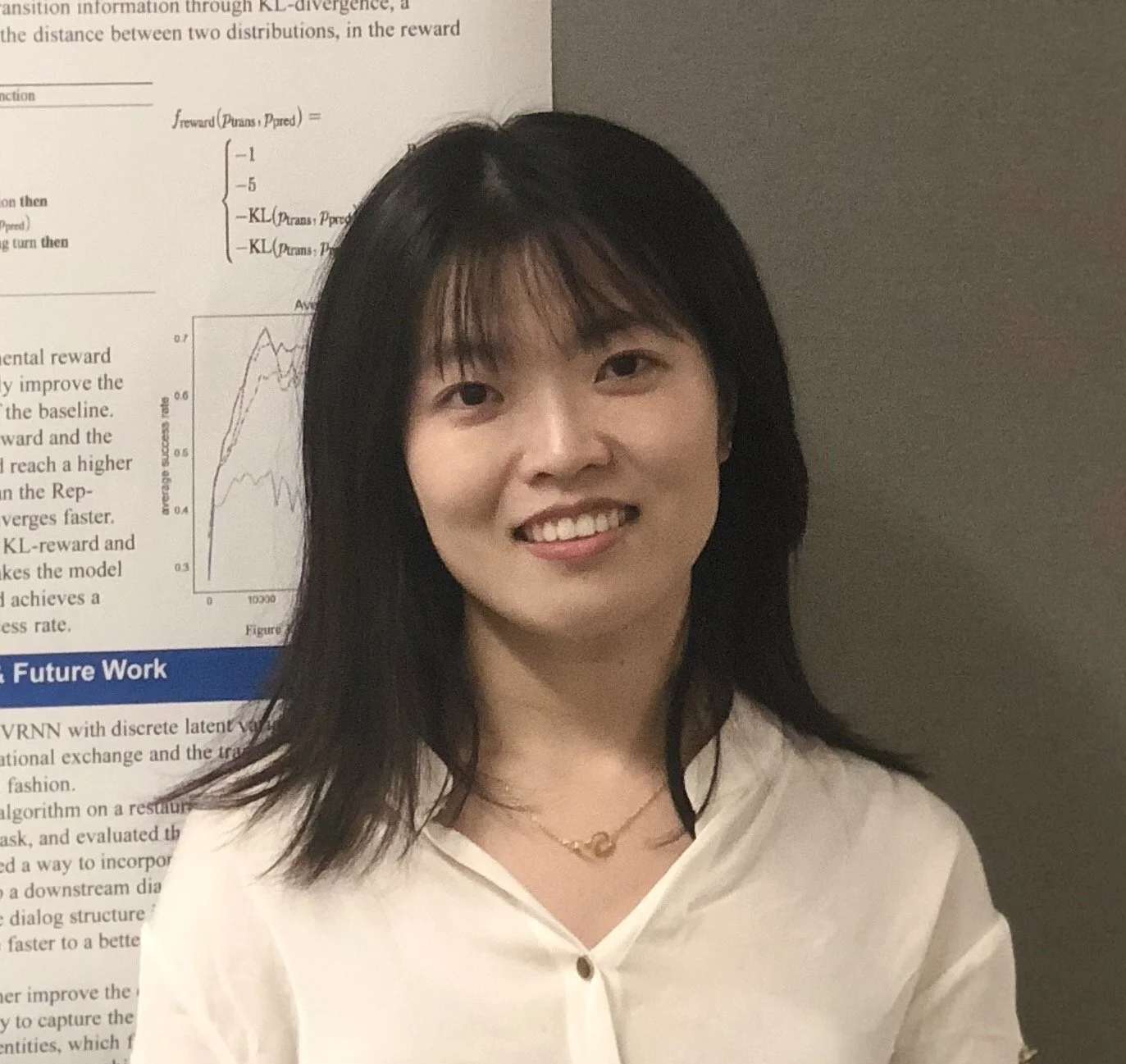
Weiyan Shi
Assistant Professor of Computer Science, Northeastern University
-
Weiyan Shi is an assistant professor at Northeastern University, working on human-AI coevolution, AI agents, and AI safety. She has been recognized as an AI2050 Early Career Fellow, MIT Technology Review's 35 Innovators Under 35, and Rising Star awards in both Machine Learning and EECS. She has received Best Paper Nomination, Outstanding Paper, Best Social Impact Paper at ACL 2019 and ACL 2024. She co-created the first negotiation AI to achieve human-level performance in Diplomacy, with the work published in Science and featured in The New York Times, Forbes, and other major media.
-
Human-AI coevolution: how sustained interaction between humans and AI systems reshapes both user behavior and model outputs over time
Emergent safety challenges in long-horizon human-AI interactions (e.g., trust calibration drift, subtle failure modes that only surface over extended use)
Understanding and supporting how non-technical users adopt and use AI agents, including barriers, mental models, and intervention design to improve effective use
Building and validating LLM-based user simulators to study human-AI interaction patterns, stress-test agent behaviors, and complement real human studies
Science of evaluation for AI agents: uncertainty estimation, robust benchmarking under distribution shift, and methods for assessing when AI outputs should (and shouldn't) be trusted
-
Genuine interest in human-AI interaction and AI's broader societal impact; motivated by questions about how people and AI systems shape each other, not just model performance
Strong curiosity about AI agents and a habit of exploring new tools hands-on; familiarity with major AI tools (e.g., ChatGPT, Claude, coding agents)
Strong programming fundamentals: comfortable building prototypes, running experiments, and wrangling data in Python
Willingness and ability to design and conduct human studies, including participant recruitment, and IRB protocols
Self-motivated and high-initiative; able to own a research direction, identify gaps and next steps, and push through ambiguity